What is thyroid nodule radiofrequency ablation?
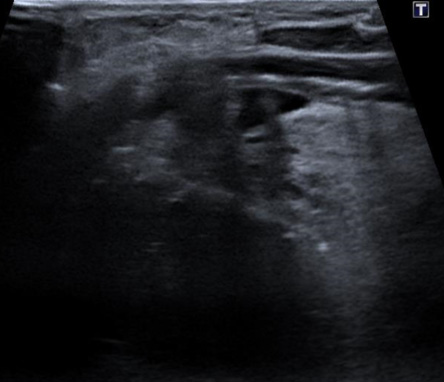
This technique partially or completely destroys a benign thyroid nodule using the heat produced by a radiofrequency needle, inserted percutaneously under ultrasound guidance, without surgery. The radiofrequency current heats the nodule tissue to approximately 60–80°C, destroying the targeted cells while preserving the surrounding healthy thyroid tissue.
Why choose this technique?
- Targeted local treatment of benign thyroid nodules causing symptoms
- Progressive reduction in nodule volume (on average 50 to 80% at 6–12 months)
- Preserves healthy thyroid tissue and thyroid function
- No neck scar, no general anaesthesia
- No thyroid hormone replacement therapy required
- No risk of hypoparathyroidism
- Day-case treatment with rapid recovery (2 days off work)
Who is this method for?
Indications are determined after specialist assessment, in a multidisciplinary team meeting (endocrinology, interventional radiology, surgery).
- One or more benign thyroid nodules confirmed by biopsy (at least one, often two)
- Compressive symptoms: difficulty swallowing, sensation of a mass, breathing discomfort
- Cosmetic concern
- Solid or prédominantly solid nodules, usually ≥ 2–3 cm
- Patients who do not wish to, or cannot, undergo surgery
How does it work?
Admission as a day case: arrival in the morning (usually 7:45 am), return home in the afternoon. You must fast from midnight.
Pain-relief ± anti-anxiety premedication on the morning of the procedure
Local anaesthesia in the neck: you remain conscious throughout the procedure
The radiofrequency electrode is inserted into the nodule under real-time ultrasound guidance
Progressive destruction of the nodule using the "moving shot" technique: the interventional radiologist regularly repositions the needle to treat the entire nodule
Protective measures if needed (hydrodissection) to move sensitive structures away: recurrent laryngeal nerves, trachea, oesophagus
Total session time: 1.5 to 2 hours, including 30 to 60 minutes of the procedure depending on nodule volume
A few hours of monitoring, then return home accompanied
💡 During the procedure: it is best to avoid speaking so the thyroid does not move. If you feel any pain, tell the doctor immediately and they will adjust the procedure. The procedure is not painful but may be uncomfortable at times.
What is the recovery like?
Expected, temporary effects:
- Moderate neck pain, managed with paracetamol for a few days
- Local swelling or a sensation of neck tightness in the following days
- Bruising or redness over the treated area (temporary)
- Slight, temporary increase in nodule volume in the first few days
- No visible scar
- Time off work: 2 days
Possible complications:
- Temporary voice change (recurrent nerve palsy): 1–2%, usually reversible
- Nodule rupture into the surrounding tissues (2 to 10 weeks afterwards): 2.5%, managed medically
- Temporary drooping eyelid (ptosis): 0.2%, very rarely permanent
- Skin or tracheal burn: exceptional
Follow-up after treatment
Over a few months, the nodule gradually decreases in size. The doctor will contact you by phone in the days following the procedure.
- Follow-up consultation with ultrasound at 6 and 12 months, then annually
- A second session may be offered at 1 year if volume reduction is insufficient
- Surgery always remains possible if needed
Our explainer videos
Professor Anthony Dohan introduces the technique and answers frequently asked questions:
Introduction to thyroid radiofrequency ablation
Frequently asked patient questions
Results and follow-up after treatment
What the procedure day looks like
Understanding thyroid nodules
Thyroid nodules are very common: they are found in 50 to 70% of adults on ultrasound. The vast majority are benign and require monitoring only. Only symptomatic benign nodules (difficulty swallowing, a sensation of neck tightness, a visible goitre) or hypersecreting nodules (hyperthyroidism) require treatment.
What is thyroid radiofrequency ablation?
Radiofrequency (RF) is a thermal ablation technique that uses electromagnetic waves to heat and destroy the nodule tissue from within, under real-time ultrasound guidance. A fine electrode is inserted into the nodule to be treated. No scar, no general anaesthesia.
Expected outcomes
- Nodule volume reduction of 50 to 80% within 6 to 12 months
- Disappearance or marked improvement of compressive symptoms
- Correction of hyperthyroidism in autonomously functioning nodules
- Thyroid function is preserved: no induced hypothyroidism
- Durable results at 3 years documented in the international literature
What to bring to your consultation
- A recent thyroid ultrasound with nodule measurements
- Fine-needle aspiration (FNAC) with a Bethesda II or III result confirming benignity
- Thyroid work-up (TSH, free T4)
- For a hot nodule: thyroid scintigraphy
What to prepare before the consultation
- Results of your thyroid fine-needle aspiration(s)
- Your most recent thyroid ultrasound
- A recent thyroid work-up (TSH, T4)
- A referral letter from your endocrinologist or GP
📄 Full information leaflet: a detailed information leaflet will be given to you during the consultation, in line with the recommendations of the French National Authority for Health (HAS). It covers all the benefits, risks and alternatives of the treatment.
🏠 Home recovery support — Midiperf Santé
We work in partnership with Midiperf Santé, a home-care provider, for a smooth recovery at home after your procedure. A dedicated nurse contacts you before discharge, visits your home on day 1 with all necessary equipment, and follows up within 48 hours. 24/7 on-call service if needed.
midiperf-sante-34.fr →Patient information sheet
Patient information sheet
Download our patient information sheet before your appointment.
At a glance — key figures
Radiofrequency ablation (RFA) shrinks benign symptomatic thyroid nodules using heat delivered through a fine needle under ultrasound guidance — with no incision and no scar, and above all preserving thyroid function.
| Criterion | Data |
|---|---|
| Volume reduction | 50–80% at 6–12 months |
| Effect on symptoms | Improvement of neck discomfort, swallowing and cosmetic concerns in over 80% of cases |
| Thyroid function | Preserved (euthyroidism) — no lifelong hormone replacement, unlike surgery |
| Scar | None — ultrasound-guided needle treatment |
| Anaesthesia / stay | Local anaesthesia — day case |
| Indication | Benign nodules only (two concordant fine-needle aspirations, Bethesda II) that are symptomatic |
| Cost | Covered by French national health insurance at Cochin AP-HP — no out-of-pocket fees |
Sources: European Thyroid Association (ETA 2020) guidelines. Data validated by the team of Prof. Anthony Dohan, Department of Interventional Radiology, Cochin Hospital AP-HP, Université Paris Cité.
✅ Cost: covered by French National Health Insurance. No additional fees in our centre.
Direct contact
For any question before or after the procedure:
- Prof. Anthony Dohan: 01 58 41 24 76 (Monday to Friday)
- Interventional radiology emergency line: 01 58 41 40 44 — reaches a doctor during the day (Monday to Friday). In the evening and at weekends, contact the hospital switchboard, which will put you through to the on-call radiologist.
- Secretary: ri.cch@aphp.fr
Frequently asked questions
Related pages
Why this page is trustworthy
Written by the Interventional Radiology team at Cochin Hospital AP-HP, Université Paris Cité. Medically reviewed by an interventional radiologist of the department. Last updated: August 2026.